Loading...
Serving Chino, CA and surrounding areas. (840) 200-1589
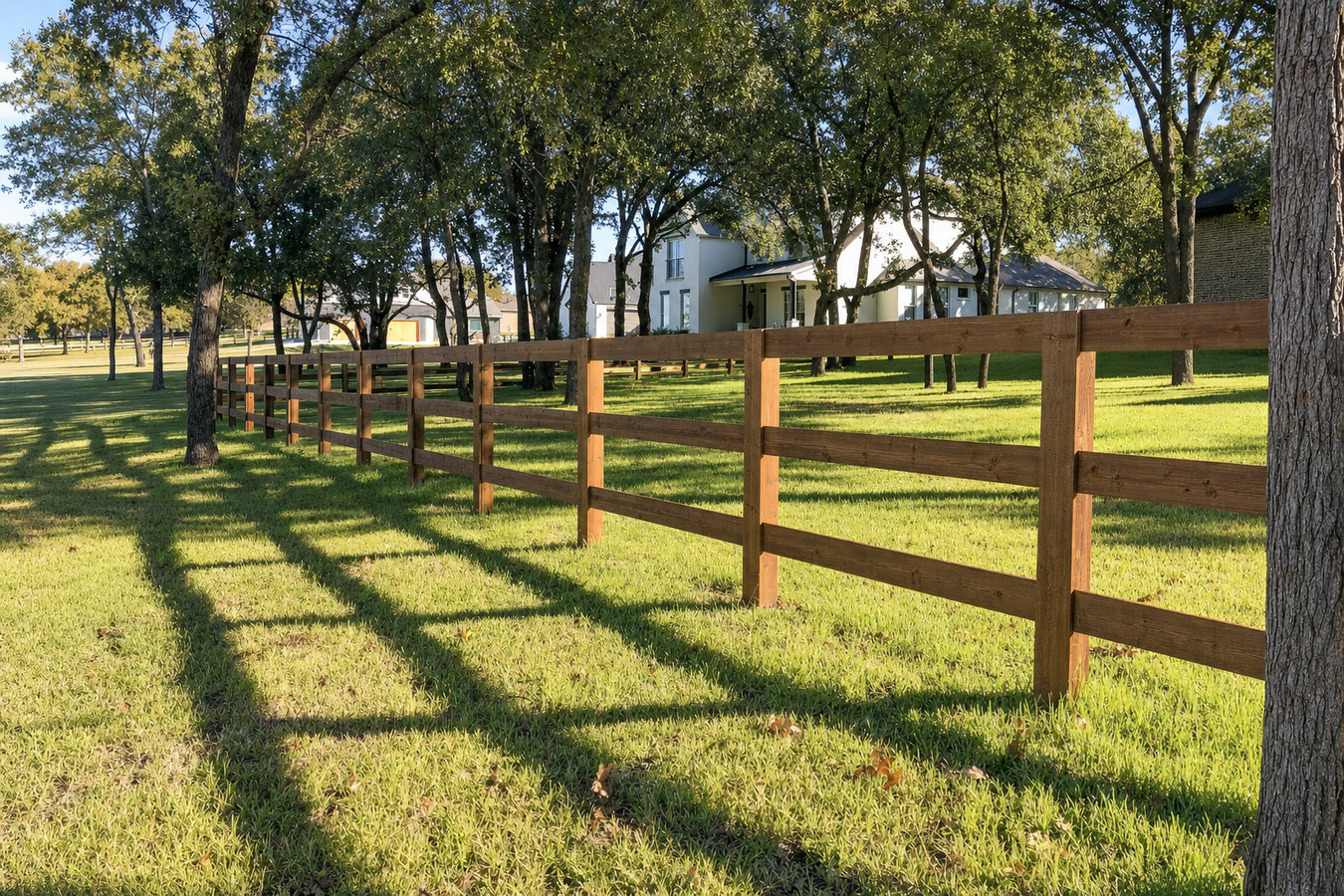
We install perimeter and cross-fencing for livestock properties in the Chino area, using materials and post-setting methods designed for local clay soil and Inland Empire summers.
Farm and ranch fencing in Chino covers perimeter containment, pasture cross-fencing, livestock-specific barriers, and agricultural gates - most smaller properties are fenced in two to five days, with larger acreage or complex layouts taking longer.
Chino has deep agricultural roots, and a meaningful number of properties in and around the city are still used for horses, cattle, goats, and poultry. If your fence is failing - posts leaning, wire sagging, gates that no longer close properly - livestock safety and property security are at real risk. The right fence for your animals starts with understanding what you are containing and what your ground conditions are. If your property also has a residential pool area, our pool fence installation service handles that barrier separately, with its own permit and inspection process.
Walk your fence line and look for any of these four signs before the next season forces a more expensive fix.
Walk your fence line and push on a few posts. If they rock noticeably or lean more than a couple of inches out of plumb, the footing has likely failed. In Chino's clay soils, this happens gradually as the ground swells and shrinks through wet winters and dry summers - and once a post starts leaning, tension on the wire or rails pulls neighboring posts out of line too.
Sagging wire is one of the clearest signs a fence is no longer doing its job. For livestock owners, a gap at the bottom of a wire fence is an escape route - goats and young calves will find it quickly. If you can see daylight under the bottom wire when you stand back and look down the fence line, the fence needs attention now.
Chino's intense summer heat dries out wood faster than in coastal areas, and untreated or older wood rails often crack along the grain after a few seasons. Cracked rails are weaker than they look - a horse leaning on a split rail can break through it. If boards are visibly split, pulling away from posts, or soft when you press on them, that section needs repair.
A fence that worked for cattle may not be safe for horses, which can get legs caught in wire that is spaced too widely. If you are bringing in a new type of animal, have a contractor assess whether your existing fence is appropriate - not just whether it is still standing. This is a common situation on Chino-area properties that shift between different agricultural uses.
We install woven wire, welded wire, steel pipe, wood post-and-rail, and board fencing across Chino and the surrounding Inland Empire. For larger perimeter runs where cost-per-foot matters most, our chain link fence installation is a practical option for equipment storage areas and secondary enclosures. For horse properties, wood post-and-rail and smooth wire with a visible top rail are the most common choices in the area because horses can see them clearly and they do not have sharp edges that cause injury.
All fence types we install include properly set corner and gate posts with concrete footings, tensioned wire or fitted rails, and hung gates with secure latches. We also handle cross-fencing to divide pastures, temporary exclusion fencing during construction or renovation, and replacement of failed sections in existing fence lines. Every project starts with a property walkthrough - we do not quote from photos or satellite images.
Suits cattle, goat, and mixed livestock properties where cost-effective containment across long runs is the priority.
Suits horse properties where visibility and a clean appearance matter as much as containment.
Suits high-traffic areas, loading chutes, and perimeters where maximum strength and longevity are required.
Suits properties with multiple animal types or rotational grazing needs that require separate enclosures.
Chino sits at the center of one of California's most historically active agricultural zones, and that history shows up in the ground. The clay-heavy soils throughout the Chino Valley expand when wet and shrink when dry - a cycle that is hard on fence posts that are not set correctly for local conditions. Triple-digit summer heat accelerates the drying and cracking of untreated wood and loosens wire tension faster than homeowners expect. We work regularly in Norco and Fontana, where the same agricultural and soil conditions apply, and we know how material selection and post-setting depth need to adapt to the Inland Empire environment.
Properties near or within the Chino Agricultural Preserve may have additional land-use considerations around fence placement and materials. If your parcel is near preserve boundaries, it is worth a call to San Bernardino County Land Use Services before work begins. California also requires that underground utilities be located before any digging - we call DigAlert (811) on every job, and the UC Cooperative Extension is a useful resource for animal-specific fencing guidance if you are deciding between fence types for a new livestock operation.
Here is how a typical project moves from first call to finished fence.
When you reach out, we ask a few basic questions about your acreage, what animals you keep, and whether you have an existing fence. We reply within one business day and schedule a free on-site visit to walk the property with you before any numbers are discussed.
We walk the full fence line, check for slopes or rocky ground, note gate locations, and ask about underground irrigation. You receive a written quote that breaks out labor, materials, gates, and cleanup - no single number without a breakdown.
Before any digging starts, we call 811 to have underground utilities marked. If your project requires a permit, we handle the application. This step typically adds a few days to a week to your timeline but protects you from costly surprises on installation day.
Corner and gate posts go in with concrete footings sized for Chino's clay soil. Wire, rails, or boards follow once posts have cured. We walk the finished fence line with you, test every gate, and address any punch-list items before leaving the property.
No pressure. We walk your property first, then give you a written estimate with a full line-item breakdown.
(840) 200-1589Chino's expansive clay soil is one of the most common reasons farm fences fail here. We set every corner and gate post with concrete footings sized for local soil conditions, so your fence stays plumb and tight through wet winters and dry summers - not just for the first season.
Chino sits in one of California's most historically active agricultural zones, and local contractors here tend to have real hands-on experience with livestock containment - not just residential privacy fencing. That matters when you are choosing what to build and what materials will hold up.
Your quote includes posts, hardware, gates, concrete, and cleanup. If something unexpected comes up during the job, we stop and talk to you before proceeding. The number you agree to at the start is the number on the invoice - no add-ons that appear later.
Triple-digit heat dries out untreated wood fast and loosens wire tension over time. We recommend pressure-treated posts and galvanized or vinyl-coated wire specifically because they hold up in this climate - so you are not re-tensioning wire or replacing cracked rails every couple of years.
California requires any contractor doing work over $500 to hold a valid state license. Before hiring anyone for agricultural fencing work, verify their license on the California Contractors State License Board website - it shows license status, coverage type, and any complaints on record.
Secure yard enclosures designed to keep dogs safely contained on residential properties.
Learn MoreHeavy-gauge chain link for large perimeter runs where cost-per-foot matters.
Learn MoreSpring and summer slots fill fast in the Chino area - reach out now to lock in your start date before the busy season.